
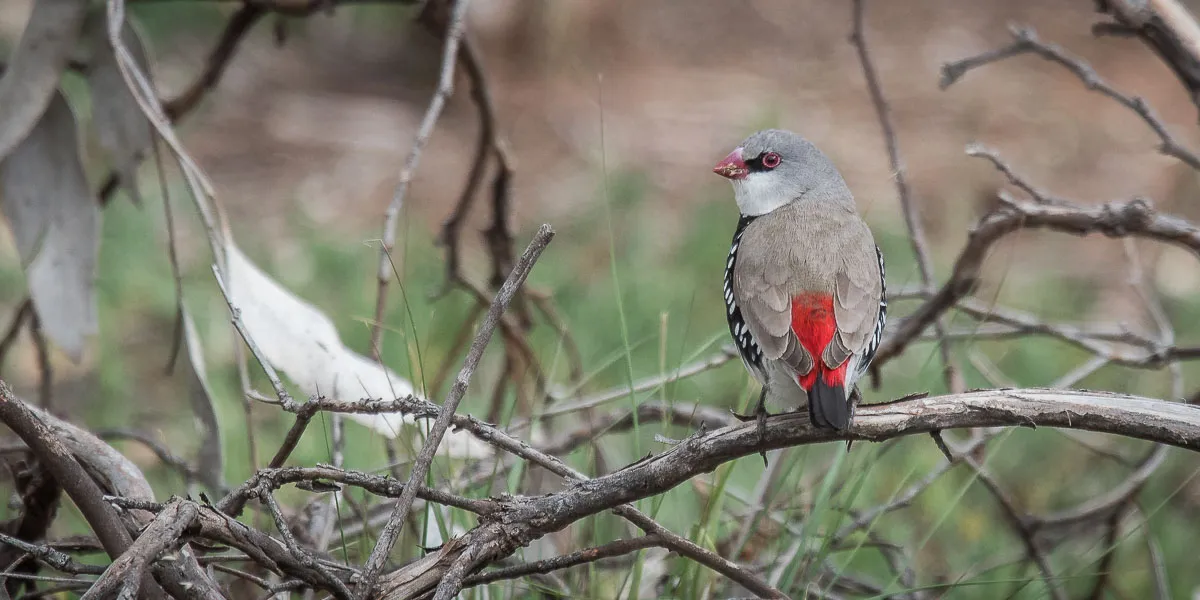
The first time I saw a Gouldian finch in person, I thought someone had snuck a painted toy into the aviary. Nothing about those colors looks accidental. Three distinct head colors, a chest that shifts from purple to yellow depending on the bird's genetics, a back that runs from bright green to blue to white depending on mutation. They're native to the tropical woodlands of northern Australia, and even in a well-kept aviary they carry a wildness with them that most pet birds don't.
They're also more sensitive than the average finch, which is why so many keepers pick one up on looks alone and then scramble to figure out why it won't thrive. This guide covers everything that actually matters: quick facts up front, then the full breakdown on colors, personality, and care.
Gouldian Finch Quick Facts
Before we go deep, here's the fast-reference profile for anyone evaluating whether a Gouldian is the right fit.
- Scientific name: Erythrura gouldiae (also listed as Chloebia gouldiae in older texts).
- Origin: Northern Australia, particularly the Kimberley region and surrounding tropical savanna grasslands.
- Wild status: Endangered in the wild, with Australian populations threatened by habitat loss, altered fire regimes, and parasite pressure.
- Size: Around 4.5 to 5 inches long, similar in body length to a zebra finch but slightly more upright in posture.
- Lifespan: 5 to 8 years in captivity with good care; shorter lifespans usually trace back to poor diet or chronic stress.
- Temperament: Gentle, non-aggressive, and quiet. Not a hands-on bird but peaceful in a mixed aviary.
- Difficulty level: Intermediate. Harder than zebras or societies, easier than many softbills or specialized waxbills.
- Ideal for: Keepers who already have some finch experience and want something visually spectacular.
If you're newer to finches and still building your baseline, it's worth reading through the top 10 finch species for beginners first. Gouldians reward experience.
Head Colors and What They Mean
The three main head color forms of the Gouldian finch are what most people picture first, and understanding them helps you identify what you're looking at and what genetics are likely at play.
- Red head: The most common in captive breeding. Red-headed males tend to show the strongest courtship displays and are often the most visually striking birds in the aviary.
- Black head: Less common than red, and historically the dominant form in wild Australian populations. Black-headed birds carry a slightly different gene expression that affects face coloration only.
- Yellow (orange) head: The rarest of the three. Yellow-headed birds are a naturally occurring mutation, not a product of selective breeding, though they're uncommon enough that they often carry a premium price in the hobby.
Body color runs independently from head color. A red-headed bird can carry a green, blue, or white body depending on its genetic background. Males show the brightest, most saturated versions of all these colors. Females carry the same genes but express them more softly, with slightly duller, more muted tones across the head and body. If you want to track how mutations stack and interact, the detail gets deep fast. For the full breakdown of what drives these color variations across finch species, this guide to color mutations in finches is a good next read.
How Colors Develop in Juveniles
Young Gouldians don't show their adult colors at fledging. They hatch with dull, olive-gray plumage that serves as camouflage in the nest, and the full adult colors don't emerge until after their first juvenile molt, usually between three and six months of age. The transition is one of the more satisfying things about raising them from young birds. You get a slow reveal over several weeks, and you can't always predict the exact shades until the molt is complete.
During this transition, handle them minimally and keep the environment stable. A stressed juvenile takes longer to complete the molt and sometimes ends up with uneven feather development that affects the adult appearance.
Personality and Behavior
Gouldians are quiet, observational birds. They don't seek human contact the way a hand-raised parrot might, and they're less chatty and frantic than zebra finches. What they offer instead is a kind of elegant calm that makes them genuinely enjoyable to watch for long stretches. If you're comparing temperaments, zebra finches are louder, bolder, and more beginner-friendly. Gouldians are subtler.
A few personality traits worth knowing before you bring them home:
- They're perch watchers. Gouldians spend a lot of time sitting still and observing. This isn't illness; it's normal behavior for the species.
- They don't handle disruption well. Changes to the cage layout, new birds, or sudden loud noises can push a Gouldian into a stress response that suppresses eating and immune function.
- Pair bonds are soft. They form bonds with their mates but aren't dramatically attached. A Gouldian that loses a companion may show a brief dip in activity but usually recovers without needing an immediate replacement.
- They signal stress physically before behaviorally. Weight loss or a fluffed posture often appears before you notice any change in activity level. A weekly weigh-in with a gram scale catches problems early.
- Males sing, but softly. The song is a low, buzzy trill rather than the loud whistle of a canary. In a group, it creates a gentle ambient sound rather than a dominant presence.
Their personalities grow on you gradually. After a few weeks of daily observation you start to read individual birds, and that's when keeping Gouldians becomes genuinely absorbing.
Care Checklist
Gouldians are sensitive to several specific conditions. Get these right and they thrive. Miss any of them consistently and you'll see chronic low-level health problems. Here's what matters most.
Temperature and Humidity
- Target temperature: 72 to 82 degrees Fahrenheit. Below 65 degrees puts them at risk, especially during molt or breeding season.
- Avoid drafts: Even mild airflow from a vent or open window can trigger respiratory issues in Gouldians. Position the cage away from any direct air movement.
- Humidity: Moderate levels, around 50 to 60 percent relative humidity, keep feathers supple and reduce respiratory dryness. A small ultrasonic humidifier nearby works well in dry climates.
- Consistency matters most: A stable 75 degrees beats a cage that swings between 68 and 82 throughout the day. Invest in a thermometer near the cage if you're unsure about your room conditions.
Housing
- Cage size: Minimum 24 inches wide for a pair, with 36 or more inches preferred. Gouldians fly horizontally in short bursts, so length matters more than height.
- Bar spacing: Half an inch or less to prevent escape or head entrapment.
- Perch variety: Include natural wood branches of varying diameters alongside standard dowels. Different diameters exercise the feet and reduce pressure-sore risk.
- Cage placement: Elevated, away from doors, windows, and kitchen fumes. Eye-level or slightly above feels safer to them than low placements near floor traffic.
Diet
- Seed base: A quality finch mix with small millets, canary seed, and grass seeds forms the foundation.
- Sprouted seeds: Especially valuable during molt and breeding season. Sprouting activates enzymes and increases digestibility.
- Fresh greens: Kale, spinach, chickweed, and seeding grasses a few times a week. These provide vitamins and moisture without heavy digestive load.
- Egg food: Soft egg-based food supports breeding pairs and molting birds. Offer it two or three times a week rather than daily to prevent over-dependence.
- Cuttlebone and mineral block: Available at all times for calcium and beak maintenance.
- Clean water daily: Gouldians are prone to bacterial infections when water sources sit stale. Change water every morning, every time.
Health Monitoring
- Watch posture first. A healthy Gouldian sits upright and alert. A fluffed, hunched bird is telling you something is wrong.
- Check breathing. Open-mouth breathing, tail bobbing, or audible clicking sounds point to a respiratory problem that needs a vet, not a home remedy.
- Weigh regularly. Most adult Gouldians run 13 to 16 grams. A drop of more than a gram in a week is a red flag worth investigating.
- Air sac mites: One of the most common and dangerous health issues in Gouldians. Caused by Sternostoma tracheacolum, these parasites live in the respiratory tract and are often invisible until the bird is in serious distress. Treatment requires a vet-prescribed medication.
Mixing Gouldians With Other Species
Gouldians do well in mixed aviaries when their housemates are chosen carefully. The key is matching temperament, not just size. Good companions include society finches, star finches, and owl finches. All three share a similar calm disposition and don't compete aggressively for perch space or food.
Zebra finches can coexist with Gouldians in a large aviary but watch the dynamic. Zebras are more assertive and will sometimes chase or outcompete Gouldians at food dishes. Multiple feeding stations solve most of this. If you're considering breeding Gouldians, Bengalese finches are often used as foster parents for Gouldian chicks, since Gouldian pairs sometimes abandon their first clutch. Having a proven Bengalese pair in the same aviary gives you a reliable backup option.
FAQs: Gouldian Finch Care
These are the questions I hear most often from people getting started with Gouldians.
Are Gouldian finches good for beginners?
Not ideally. They're more sensitive to temperature, diet gaps, and stress than zebra finches or societies. Most experienced keepers recommend starting with a hardier species first, then moving to Gouldians once you have a feel for finch keeping generally.
Can Gouldian finches be kept alone?
Technically yes, but they do better in pairs or small groups. A lone Gouldian in a quiet house can develop low-level stress behaviors over time. If you keep just one, provide visual contact with other birds when possible and make the environment as stimulating as you can.
How do I tell male and female Gouldians apart?
Males have brighter, more saturated color across the face, chest, and back. Females carry the same pattern but in noticeably muted, dustier tones. In black-headed birds the difference is most obvious on the chest. In red-headed birds, the female's red is often a slightly paler, more orange-tinted shade.
Why does my Gouldian finch look dull or faded?
Faded color in an adult Gouldian usually points to one of three things: poor diet (especially low in carotenoids and protein), a stressed molt that didn't complete properly, or the bird being a female, which naturally shows softer colors than the male. If a previously bright bird fades suddenly, check diet first, then consider a vet visit to rule out illness.
Worth the Extra Effort
Gouldian finches ask more of you than most pet finches. The temperature management, the dietary variety, the careful introductions, the health monitoring. All of it adds up. But when you get it right and a healthy Gouldian is moving through a well-planted aviary with its colors fully expressed, it's hard to think of a more visually satisfying bird to keep. They're a species that rewards investment in both knowledge and environment, and once you've kept them well, going back to the basics feels like a step down.