
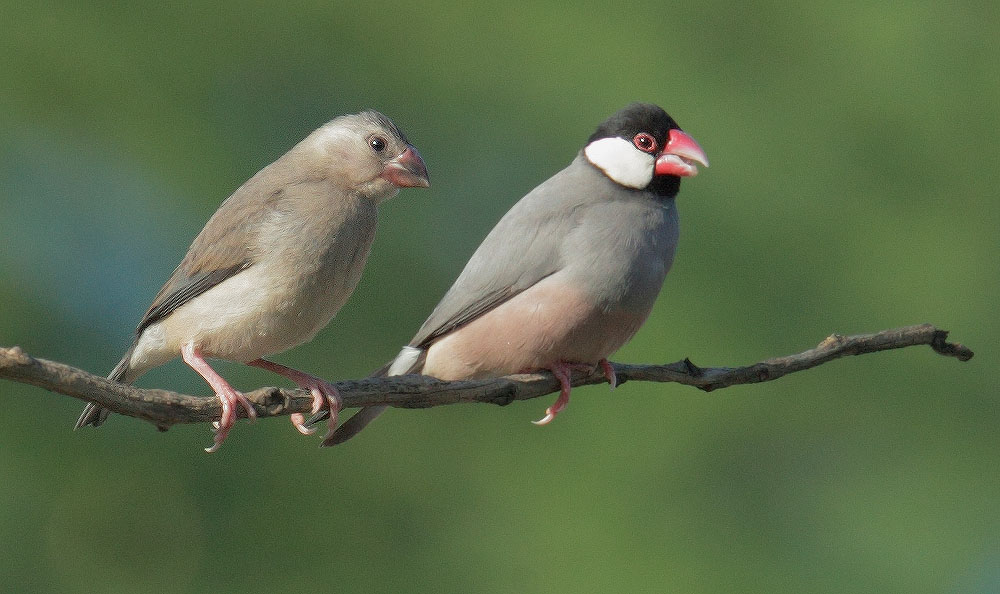
Here's the short answer: no, the Java sparrow is not technically a finch, though it's close enough to share the same family tree. If that feels like a technicality, stick with me, because once you understand exactly where it sits in bird classification, everything about caring for one starts to make more sense.
I kept Java sparrows for almost two years before I really dug into the taxonomy. When I finally did, a lot of things clicked into place: why they needed more room than my zebra finches, why their diet required more grain variety, and why they carried themselves with a different kind of confidence. The classification isn't just trivia. It shapes the whole approach.
So Is the Java Sparrow a Finch?
The Java sparrow, scientific name Padda oryzivora, belongs to the family Estrildidae, the same family that includes zebra finches, Gouldian finches, and society finches. So it shares a family with true finches. But within that family, it falls into a distinct group called the munias and mannikins, which are heavier-bodied, thick-billed grain eaters with behavioral patterns that differ noticeably from the smaller estrildids most people picture when they say "finch."
The clearest way I can put it: calling a Java sparrow a finch is like calling a cousin a sibling. Related, yes. The same thing, no. These birds are sometimes sold under the name Java finch or Java rice bird, but neither name reflects their actual taxonomy. The English name "Java sparrow" is the most accurate of the common labels.
Classification Facts at a Glance
Here's where the Java sparrow actually fits in the bird world:
- Family: Estrildidae, shared with zebra finches, Gouldians, and society finches.
- Genus and species: Padda oryzivora, the genus Padda covering Java sparrows and their close relative the Timor sparrow.
- Common group: Munias and mannikins, not true finches.
- Origin: Native to Java and Bali; now introduced to many tropical regions around the world, including Hawaii, where feral populations have become established.
- Adult size: Around 15 to 17 cm and 20 to 25 grams, heavier and stockier than most pet finches.
- Nicknames: Java finch, Java rice bird, ricebird (a nod to their wild diet of rice grains).
That genus name, Padda, is worth remembering if you ever want to look up species-specific research. It separates Java sparrows cleanly from the Lonchura munias and the Taeniopygia finches on databases and care guides.
How Java Sparrows Differ From True Finches
Even in the same aviary, the differences are hard to miss once you know what to look for. Java sparrows move, behave, and communicate in ways that consistently set them apart from the smaller estrildids.
- Body and beak. Java sparrows have a thick, blunt beak built for husking hard rice grains, distinctly more powerful than the finer bills of zebra or society finches. Their heavier build also means they prefer sturdier perches than the standard dowels sold for small finches.
- Temperament. They carry themselves with a calm confidence. Not aggressive in most cases, but assertive, and they will dominate smaller birds in a mixed aviary without meaning to.
- Vocalizations. Their calls are deeper and more deliberate. The song is melodic but not constant the way zebra finch chatter is. They communicate with intention rather than filling space with noise.
- Pair bonding. Java sparrows form stronger, longer-lasting pair bonds. They take more time choosing a mate and are more selective about nesting conditions than most finches.
- Flight style. They prefer long horizontal flight paths. A tall, narrow finch cage frustrates them. They need width.
- Social structure. In the wild, they live in dense flock formations across open grasslands and introduced regions. In captivity, a group of four or more settles more comfortably than a lone pair.
If you've been managing them the same way you manage your zebra finches, some of these gaps explain a lot.
Java Sparrow Care: A Quick-List
Because they sit in their own category, their care requirements differ from standard finch advice in a few specific ways. Here's what I've found matters most:
- Cage size. Go wide, not tall. A long flight cage with at least 90 cm of horizontal space is where they feel comfortable. Smaller cages lead to pent-up energy and stress. If you want a good starting point, the best cage setups for finch pairs and groups covers the size range well, though Java sparrows will always want the larger end.
- Group size. Four or more is better than a single pair. Flock dynamics calm them down and make their social behavior more natural and predictable.
- Diet. Their wild name, ricebird, tells you something: they evolved eating grains heavier than millet. A good seed mix should include canary seed, oats, whole rice, and sprouted seeds alongside millet. Fresh greens like kale, spinach, and chopped carrot round it out. For a solid framework, this guide to nutritionally balancing a finch diet applies well with the grain emphasis adjusted upward.
- Water hygiene. They dip their beaks after eating, so water dishes foul faster than with small finches. Change water twice a day.
- Nesting material. When breeding, they build substantial nests. Offer coconut fiber, dry grass, and palm strips. Soft nesting material alone isn't enough; they want structure in what they build.
- Perches. Sturdy natural branches, not thin dowels. Their weight needs something that doesn't flex.
- Temperature. They come from tropical Java and Bali and prefer warm, stable conditions. Drafts and sharp temperature swings stress them more than many keepers expect.
Get those fundamentals right and Java sparrows are remarkably easy to keep. They don't demand constant attention, but they reward a well-thought-out setup.
Java Sparrows vs. Finches: Side-by-Side
A quick comparison makes the care differences easier to see at once:
- Size: Java sparrows 20-25g vs. zebra finches 10-16g.
- Beak: Thick, grain-cracking vs. fine and pointed.
- Preferred cage width: 90+ cm vs. 60 cm acceptable for small finches.
- Group preference: Flocks of 4+ vs. pairs or small groups.
- Pair bond: Strong and selective vs. relatively fast-forming.
- Nesting: Substantial, structured nests vs. lighter, looser nests.
- Primary diet base: Heavier grains and rice vs. millet-dominant mixes.
These differences aren't obstacles. They're just what the species actually needs, and knowing them upfront saves a lot of guesswork. If you enjoy working with exotic estrildids, the care profile here isn't unlike what Gouldian finches require: structured, specific, and very rewarding once you hit the right setup.
FAQs: Java Sparrow Finch Classification and Care
These are the questions I get most often from people who've just picked up their first Java sparrow:
Is a Java sparrow a finch or a sparrow?
Neither in the strict sense. It belongs to the Estrildidae family alongside finches, but it's classified as a munia or mannikin rather than a true finch. The common name "sparrow" reflects its origin and appearance more than its actual taxonomy.
Can Java sparrows live with zebra finches?
With caution. Java sparrows are heavier and more assertive, and they can unintentionally bully smaller birds during feeding or at perches. A large aviary with plenty of space and perches can make it work, but a cramped cage is likely to stress the smaller birds.
Are Java sparrows good for beginners?
They're a reasonable choice if you understand that they aren't beginner finches. Their care isn't complicated, but they need more space and a more varied diet than most first-time setups provide. If you've kept finches before and want something with more presence and personality, they're a great next step. There's also a broader world of lesser-known finch species worth exploring if you're looking to expand your aviary.
What's the scientific name for the Java sparrow?
Padda oryzivora. The species name oryzivora means "rice-eater" in Latin, which lines up perfectly with their wild diet and their longstanding nickname of ricebird.
Worth Keeping for What They Are
The Java sparrow sits in a genuinely interesting spot in aviculture: close enough to finches to be kept in the same circles, distinct enough to need its own approach. Understanding that distinction doesn't complicate their care. It simplifies it, because you stop trying to apply advice that was written for a different bird.
Once you set them up for what they actually are, a flock-preferring, grain-heavy, wide-flying bird with strong pair bonds and a calm, deliberate personality, they become one of the more rewarding species you can keep. The voice alone, deeper and more considered than the constant chatter of zebra finches, makes the room feel different when they're comfortable. That's the payoff for getting the setup right.