
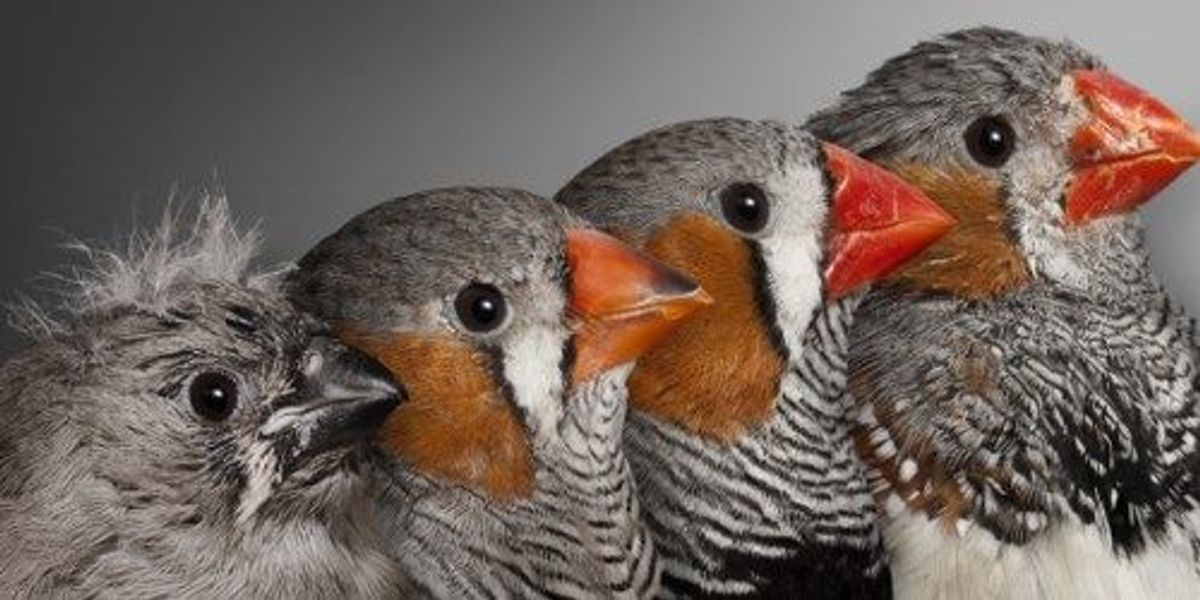
Finches do not bond the way a parrot does. There's no stepping onto your finger, no eager scrambling toward you the moment you open the cage. Trust with these birds is quieter than that, built through presence and predictability rather than handling. When I mapped out a day-by-day approach to bonding, the results were consistently better than anything I'd tried in a single long session. What the seven-day plan really does is give the finch enough time to stop reading you as a threat and start reading you as part of its safe world.
Here's how to work through it, with realistic notes on what to expect each day and what to watch for along the way.
What Finch Bonding Actually Looks Like
It helps to go in with the right mental picture. Bonding with a pet finch is not about physical closeness. A well-bonded finch might never sit on your hand, and that's fine. What you're actually building is this: the bird sees you enter the room and keeps eating. It chirps back when you talk. It moves toward you rather than away. These are the real signs of trust with this species, and they matter more than finger-training ever will.
The things that accelerate bonding with finches:
- Predictable timing for feeding and interaction.
- Low, calm movements whenever you're near the cage.
- A consistent, soft vocal tone when you speak near them.
- Treats used as a bridge, not a bribe.
The things that reliably set it back:
- Reaching into the cage without warning.
- Loud rooms, sudden sounds, or chaotic movement.
- Skipping days, then overdoing it to compensate.
- Treating the bird's retreat as failure and pressing harder.
None of this requires any special skill. It just requires consistency, which is why a structured week works so well as a starting framework.
The 7-Day Bonding Plan
Work through each day in order. If a day doesn't go smoothly, repeat it before moving on rather than pushing ahead.
- Day 1: Quiet presence. Spend 15 to 20 minutes near the cage doing something low-key, reading, working, or simply sitting. No approaching, no talking yet. Let the finch observe you without any demand. The goal is for your presence to feel unremarkable.
- Day 2: Soft voice introduction. Start talking near the cage in a calm, unhurried tone. It doesn't need to be directed at the bird. Read something aloud, narrate what you're doing, or just speak naturally. The finch is memorizing the rhythm and register of your voice, not the words.
- Day 3: Food association. Place a small treat, millet spray, a leafy green, or a piece of soft fruit, near the front of the cage or clip it to the bars. Then step back and let the finch approach it on its own. The point is simple: your hand near the cage starts to mean something good is coming.
- Day 4: Hand visibility. Rest your hand just outside the cage bars for a minute or two, keeping it completely still. Don't reach in. You're giving the bird a chance to look at your hand as a neutral object, not a threat. If the finch watches calmly from nearby, that's success for today.
- Day 5: Treat from the hand. Offer a treat through or near the bars and hold it steady. Wait. If the bird doesn't approach in the first session, try again later in the day. Voluntary engagement is the whole point here. A finch that takes the treat on its own schedule is learning something much more durable than one that's been cornered into it.
- Day 6: Cage-side activity. Introduce a small foraging item, a fresh branch, or a toy near your usual spot by the cage. Let the finch explore it while you're nearby. This shared-space dynamic starts to make you feel like a familiar, safe part of the environment rather than an external presence that occasionally appears.
- Day 7: Anchor the routine. Pick two or three short moments to repeat every day going forward: a morning greeting, a treat at the same time, a few minutes of conversation during feeding. Routine is what converts a good week into a lasting bond. The finch will start anticipating these moments, which is exactly what you want.
By the end of the week, most finches show at least some visible shift. Don't be discouraged if yours is slower. Some individual birds take two or three passes through this plan before the comfort really shows up.
Signs the Bond Is Building
Finch trust signals are subtle compared to what you'd see in larger birds, but once you know what to look for, they're easy to read. These are the ones that matter most:
- Relaxed perching when you approach. A comfortable finch stays on its perch instead of flying to the far corner. One foot tucked up is an especially good sign.
- Soft chirping in response to your voice. When the bird talks back, it's engaging rather than alarming.
- Preening while you're present. A finch only grooms itself when it feels safe. If it preens near you, that's a real vote of confidence.
- Moving toward your side of the cage. Voluntary approach is the clearest trust signal there is.
- Eating while you're nearby. A stressed finch stops eating when it feels watched. A comfortable one keeps eating right through your presence.
Learning to read these signals is worth the time. It also helps you catch early signs of a stressed finch before they derail your progress. If your bird suddenly regresses mid-week, something in its environment probably changed, not you.
Do's and Don'ts for the Whole Week
These apply across all seven days, not just the early ones.
Do:
- Keep your movements slow and predictable near the cage.
- Talk to the bird even when there's no particular agenda.
- Try again later if a session goes sideways, rather than pushing through.
- Keep the cage in a lower-traffic area of the room during this week.
- Check that your finch looks physically healthy and alert before each session. Sick or uncomfortable birds don't bond, they survive.
Don't:
- Reach into the cage unless necessary for cleaning or health checks.
- Offer treats so frequently that they lose their value.
- Skip two or more days in a row and try to make up for it in one intense session.
- Interpret a scared or retreating bird as unfriendly. It just needs more time.
- Allow young children or other pets near the cage unsupervised during the bonding week.
These guardrails matter more than any individual technique in the daily plan.
The Social Factor: One Finch or Two
It's worth addressing this directly because it affects how the bonding plan works. Finches are flock birds, and a lone finch often bonds more readily with its keeper because you become its primary social contact. Two or more finches will bond strongly with each other first, and human interaction becomes secondary.
Neither setup is wrong. A single pet finch who has consistent human interaction can thrive and become noticeably responsive. A pair kept together for companionship will be healthier and less anxious day-to-day, even if they're less focused on you. Think through whether your finch needs a companion before the bonding week if you haven't settled this yet. The answer shapes your expectations going in.
Keeping the Bond After Day Seven
The plan creates a foundation. What you do with it daily is what actually builds the relationship over time. The good news is that maintenance is simple once the habit is established. A few minutes each morning, a consistent feeding schedule, and regular low-key presence near the cage are all it takes. Building this into a daily care routine makes it easier to stick with, and the bonding moments are just folded in with everything else.
Some finches deepen noticeably over weeks two through four. The bird that kept its distance on day three might be hopping to the near perch whenever you sit down by week four. Give it that time and don't treat day seven as the finish line.
FAQs: Bonding with Your Finch
Quick answers to the questions that come up most often when starting this process.
Can I bond with a finch that wasn't hand-raised?
Yes, though it takes longer. A wild-caught or aviary-raised finch has had less human contact and starts with a higher baseline of caution. The same seven-day framework applies, but you may need to repeat days two through four several times before the bird settles into the pattern. Consistency matters more than speed.
How do I know if my finch trusts me?
Look for the quieter signals: staying on the perch when you approach, chirping back when you talk, eating while you're nearby, and gradually moving closer to your side of the cage without any prompting. A finch that preens in your presence is genuinely comfortable.
My finch is scared of my hand. What should I do?
Back up to Day 4. Rest your hand near the cage without reaching in and without offering anything. Do it daily for a few minutes until the bird stops retreating. Some finches simply need more time at the hand-visibility stage before food works as a bridge. Don't skip it.
Will my finch ever sit on my finger?
Some do, especially single birds who are comfortable with regular handling. Many never will, and that's not a sign of failure. It's just the nature of the species. Finger-perching is nice but it's not the measure of a bond. A finch that chirps when you enter the room and stays calm when you clean its cage is well-bonded, full stop.